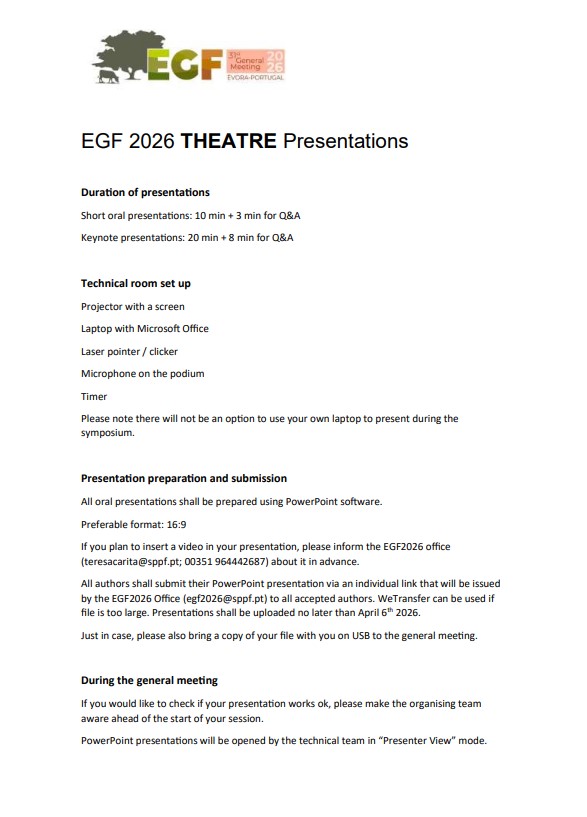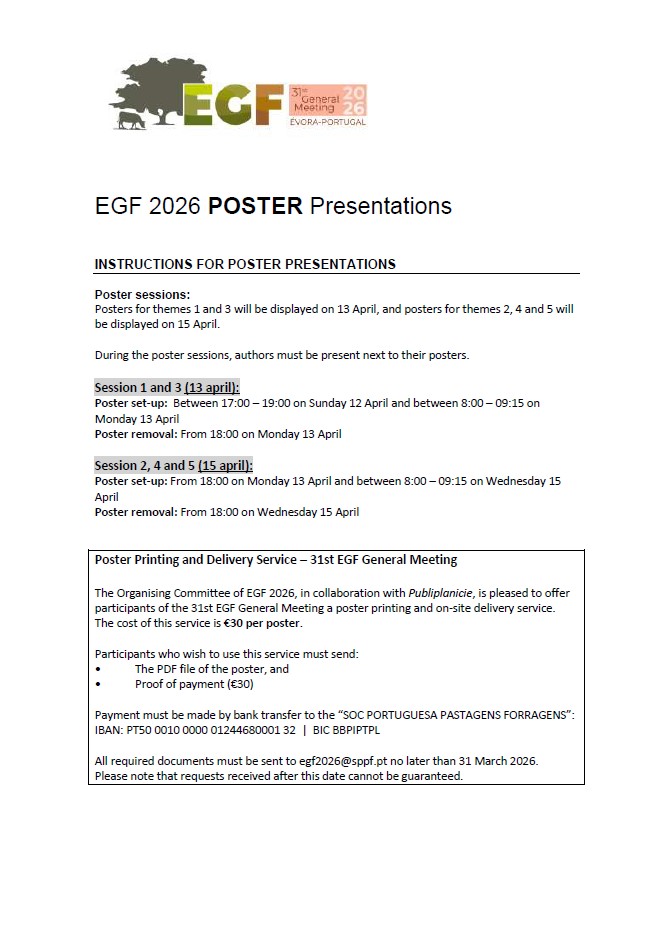

Scientific Information
Theme sub-themes of the General Meeting
Challenges and innovations for grasslands resilience
sub-themes
- Climate change and grasslands, soil and water management
- Impacts of Climate Change on Grasslands Across Europe
- Grasslands' Ability to Adapt to Climate Change
- Carbon Sequestration in Grasslands to Mitigate Climate Change
- Soil, Water, Cropping Practices and Grazing Management for Grassland Stability
- New Technologies for Grassland Development and Resilience
- Agroforestry, pastoralism and society
- The Role of Grasslands in the Sustainability of Agroforestry Farms
- Synergies Among Grasslands, Shrubs, Trees, and Livestock in Agroforestry Systems
- Practices to Prevent Degradation in Agroforestry Systems
- Grazing and Pastoralism: Meeting Societal Demands
- The Contemporary Role of Pastoralism
- Pastoralism and Emerging Technologies
- Pastoralism: Balancing Farmers’ Wellbeing, Consumer Expectations, Animal Welfare, and Biodiversity
- Breeding for new challenges
This may include but is not restricted to:
- Incorporation of New Plant Species in Farming Systems
- Plant Breeding Strategies in Response to Shifting Weather Patterns
- Plant Breeding Strategies to Reduce Methane Emissions
- Plant Genetic Traits and Their Role in Reducing Grazing Emissions
- Leveraging Animal Genetic Diversity to Tackle New Grassland Challenges
- Sustainable livestock production systems based on grasslands: Challenges and opportunities (EAAP)
- Grassland-based site adapted management
- Ecosystem services provided by grasslands use by livestock
- Protein self-sufficiency of ruminant and monogastric production systems
- Precision livestock farming
- Grassland-based animal product quality and labelling
- Grasslands and rural land policy tools to face global challenges
- Policy Tools for Adapting Pasture Functions
- Eco-Schemes and Rural Development Programs in Response to Pasture Loss
- Addressing Emerging Challenges through Grassland Public Policies
- Building Resilience: Policies as Buffers Against Future Shocks
- Fostering the Role of Pastures in the Stability of Agricultural Systems
Business Meeting EGF 2026
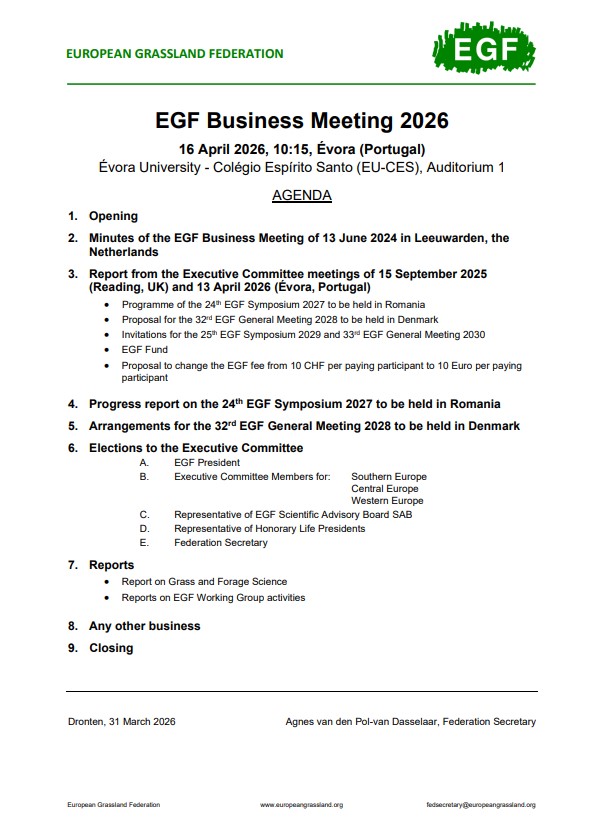
Agenda BM 2026
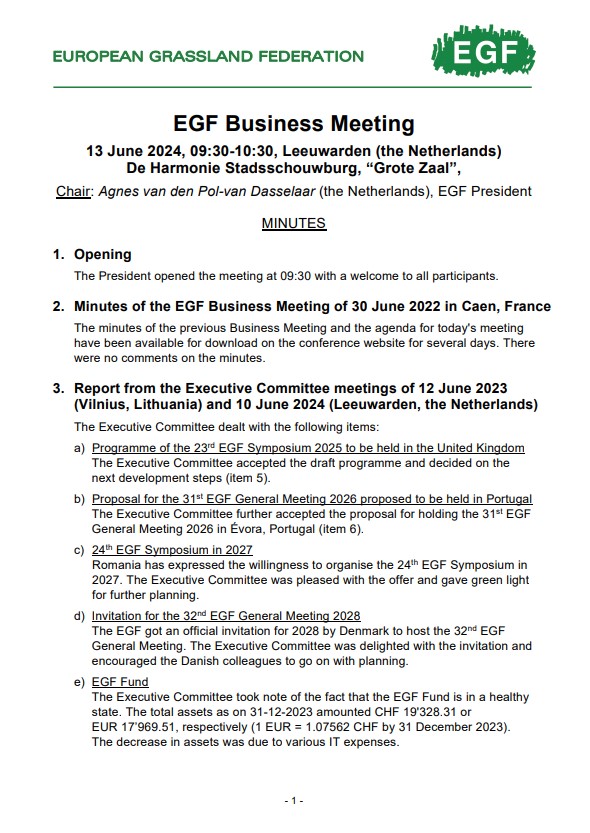
Minutes BM 2024
KEY DATES
|
|
From |
To |
|
Abstracts submission |
01/04/2025 |
30/05/2025 |
Final deadline for article submissions |
15/08/2025 |
|
|
Deadline for revised papers |
17/10/2025 |
|
|
Early bird registration |
01/06/2025 |
23/01/2026 |
|
Standard registration |
16/01/2026 |
31/03/2026 |
The Scientific Committee will select the oral papers and the posters. Authors of accepted abstracts will be invited to write a full paper (3 pages) with a deadline of the 15/08/2025.
The papers will be subject to a further review. All accepted papers will be published in Grassland Science in Europe.
Presentation Guidelines (Information will be provided soon)